The Story of Shih Tzu
From Forbidden City to Family Companion
The Shih Tzu may be small, but its history spans temples, palaces, and ancient empires.

Often called the “lion dog,” this beloved breed carries a history steeped in mythology, royalty, and near extinction. From ancient temples to imperial palaces, the Shih Tzu has always been more than just a pet—it was a symbol of power, protection, and companionship.
Ancient Origins 🏯
Sacred Dogs of Tibet
While the exact origins of the Shih Tzu are not perfectly documented, most historians agree the breed descends from small, lion-like dogs bred in Tibet.
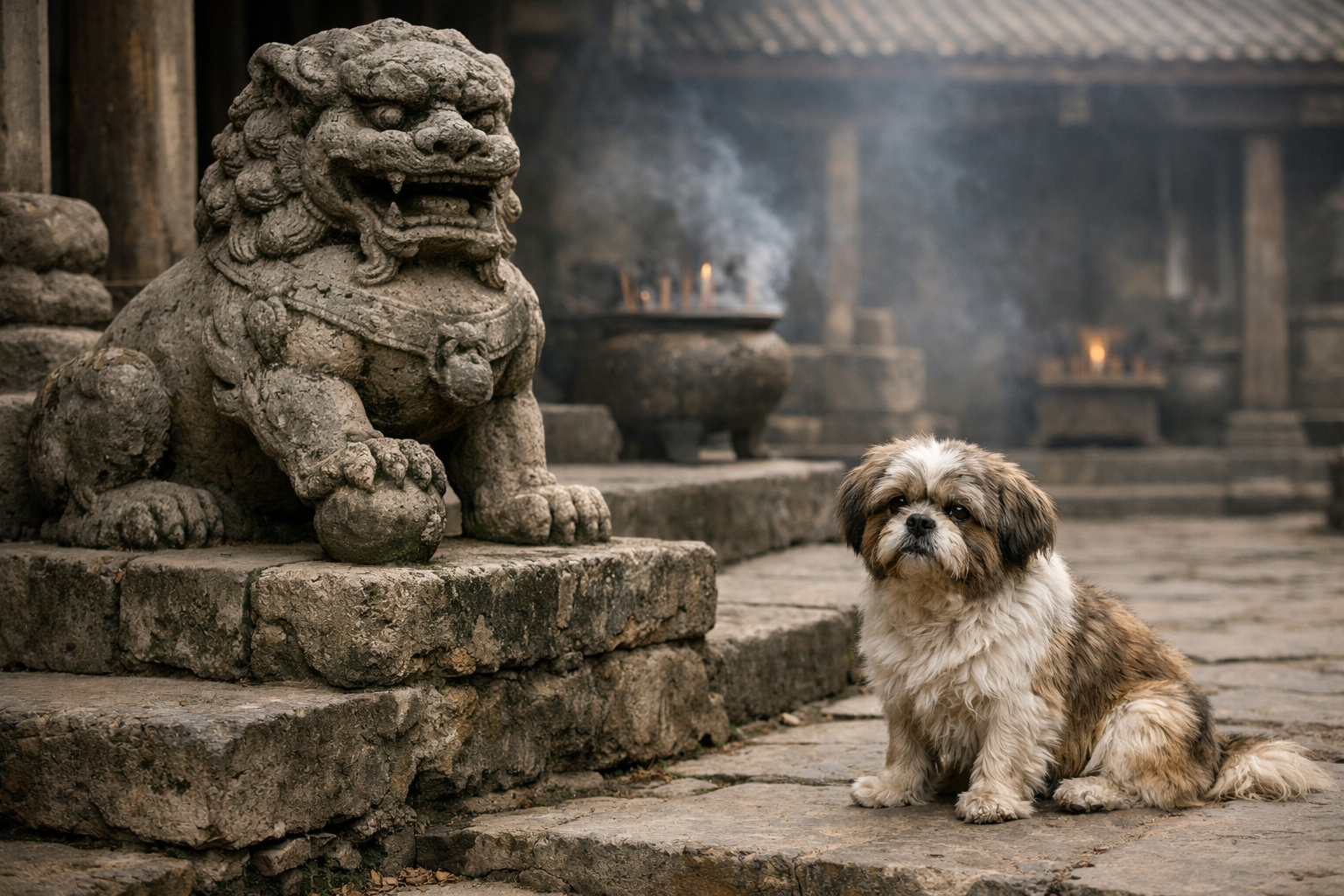
In Buddhist tradition, lions were sacred creatures—symbols of strength and divine protection. Legend even tells of Buddha riding on the back of a lion. Since real lions didn’t exist in China, breeders sought to create dogs that resembled them instead.
These early “lion dogs” were highly valued. Historical accounts suggest small companion dogs were gifted between rulers or even taken as prized possessions during times of war
The Imperial Era 👑
Empress Cixi’s Legacy
The modern Shih Tzu as we know it today owes much of its development to one powerful figure: Empress Dowager Cixi.
In the late 19th century, Cixi established a highly controlled breeding program within the Forbidden City. Managed by court eunuchs, this program focused on refining the ideal “lion dog”—small, elegant, affectionate, and unmistakably regal.
Under her rule:
Only royalty could own these dogs
They were considered sacred companions
They were bred for beauty, temperament, and companionship
Some were gifted to foreign dignitaries as rare treasures
Dogs that didn’t meet her exacting standards were removed from the palace breeding program—highlighting just how selective and intentional the process was .
These dogs weren’t just pets—they were living symbols of status and refinement.

Empress Dowager Cixi oversaw an extensive imperial breeding program that helped shape the modern Shih Tzu.(Artistic interpretation)
A Brush with Extinction ⚠️‼️
After Empress Cixi’s death in 1908, her carefully maintained breeding program collapsed.
What followed was chaos. Without strict breeding oversight, the distinct lines of Shih Tzu, Pekingese, and Pugs became blurred. Then came the most devastating blow:
After the 1949 Chinese Communist Revolution, dogs associated with the imperial court were eliminated in China.
The Shih Tzu was nearly lost forever.
Saved by Just a Handful 🌍🐾
Remarkably, the breed survived thanks to a very small number of dogs that had already made their way to Europe.
Modern Shih Tzu are believed to descend from roughly 13–14 dogs imported to England and Scandinavia in the early 20th century.
From this tiny foundation:
Breeders in England and Europe worked to standardize the breed
Early dogs varied widely in size and structure
Crossbreeding (including some controversial pairings) helped stabilize traits
Eventually, a recognizable and consistent Shih Tzu emerged
It wasn’t easy—early breeders had to define what the Shih Tzu should look like without clear historical standards
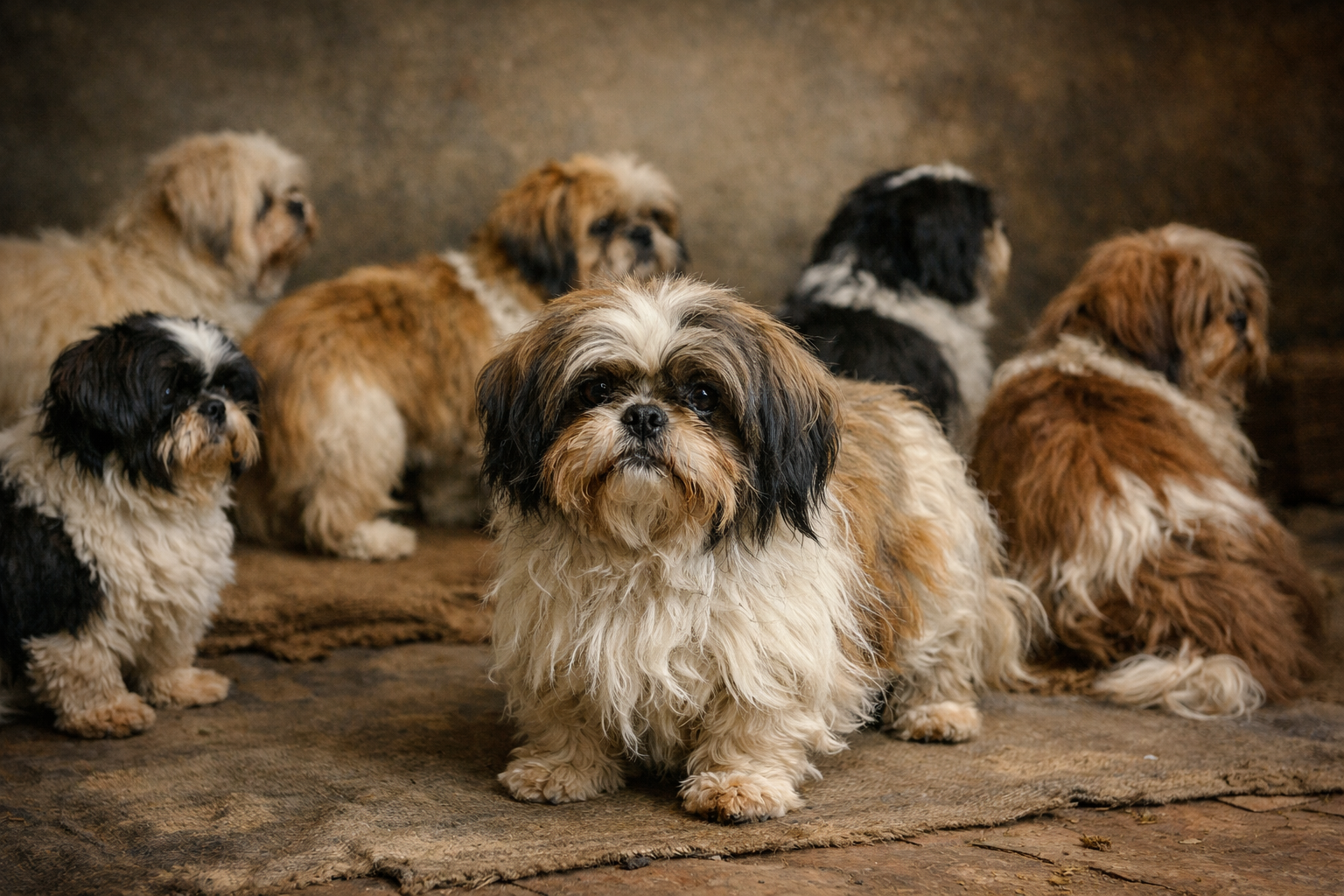
The modern Shih Tzu descends from a small group of dogs brought to Europe in the early 20th century, where the breed was carefully preserved and refined.
The Journey to the
Modern World 🇺🇸
Shih Tzu eventually made their way to North America, often brought home by soldiers stationed overseas.
Interest in the breed grew quickly:
Breed clubs formed in the mid-1900s
The American Shih Tzu Club was established in 1963
The breed was officially recognized by the AKC in 1969
From there, popularity exploded.
The Shih Tzu Today 🐶
Royal Companion At Home
Despite centuries of change, one thing hasn’t shifted:
The Shih Tzu’s purpose has always been companionship.
They were bred to sit beside emperors—and today, they’re just as content curled up beside you.
Known for:
Affectionate, people-loving personalities
Confident (sometimes slightly sassy) demeanor
Luxurious, flowing coats
Deep loyalty to their humans
A well-bred Shih Tzu should be friendly, outgoing, and self-assured—not timid or aloof. As noted by breed historians, temperament is just as important as appearance in preserving the integrity of the breed

Today, the Shih Tzu’s purpose remains unchanged—to be a devoted companion, just as it was in the royal courts of China.
A ‘Little Lion’ with a Big Legacy 💫
From sacred Buddhist symbolism to imperial exclusivity, near extinction, and global popularity—the Shih Tzu has lived many lives.
And yet, through it all, they’ve remained exactly what they were always meant to be:
A devoted companion.

Vaiden's “Just Pretending” Tressa
🎥 Want to Learn More?

For a deeper dive into the breed, you can explore this helpful 8-min video overview from the AKC by clicking the thumbnail above or visiting:
👉 https://www.akc.org/expert-advice/dog-breeds/shih-tzu-history/
📚 Sources
American Kennel Club (AKC). “Shih Tzu History: From Royal Dogs to Beloved Companions.” Updated February 10, 2025.
Holko, Madonna. “A Brief History of the Shih Tzu.” ShowSight Magazine / Top Notch Toys, January 2024.
Historical accounts of Empress Dowager Cixi’s imperial breeding program and its role in the development of the modern Shih Tzu (compiled from breed history references and AKC archival materials).
